(1) Prices. Prices exclude government fees and taxes, any finance charges, any dealer document processing charges, any electronic filing charge, any NMEDA charge and emission testing charge. Prices are subject to change; please see store for details and eligibility of any rebates. We reserve the right to change any information at any time, including prices and make no guarantee on the accuracy of the information contained herein.
(2) Loan Payment Calculator. The results of this loan payment calculator are for comparison purposes only. Estimated Payment will be an approximation, actual payments from a financial institution may vary. Subject to credit approval and terms.
(3) Fuel Economy. This information contains EPA estimates for this vehicle when new. Actual fuel economy will vary for many reasons, including driving conditions and how the car was driven and maintained. Aftermarket modifications to the vehicle can affect fuel economy, especially those that change the vehicle’s weight, aerodynamics, or wheel/tire size. Estimates based on data from fueleconomy.gov.
(5) Buy Direct FREE Delivery Anywhere in the United States. Free delivery valid with the purchase of a pre-owned vehicle through our Buy Direct Program. Free Delivery for vehicles purchased in Alaska and Hawaii only valid from California MobilityWorks locations.
(8) Home Test Drive. Test drive must be within 100 miles of a MobilityWorks location. Valid driver’s license and proof of insurance is required. Only one test drive per customer. Maximum 100 miles per test drive. Fuel is not included. Vehicles available for test drive are subject to inventory availability on date of test drive. Smoking is prohibited in vehicle. Excludes test drives for commercial use.
(12) Limited to one accessible vehicle purchase per customer. Competing commitment must be presented prior to purchase. Other terms and conditions may apply. Excludes state subsidized rates and loans. Void where prohibited by law.
(13) Free 24- Hour Test Drive. Valid driver’s license and proof of insurance is required. Only one test drive per customer. Maximum 100 miles per test drive. Fuel is not included. Vehicles available for test drive are subject to inventory availability on date of test drive. Smoking prohibited in vehicle. Excludes test drives for commercial use.
(15) Free Delivery from the nearest MobilityWorks location to your home.
(16) Buy Now – Love It 5-Day Money Back Guarantee. The 5-day period begins the day the vehicle is delivered and ends at 5:00 PM Central on the fifth day. Program availability may be subject to credit prequalification and all may not qualify. Additional program limitations, terms and conditions apply.
(21) FSA or HSA Eligible. Not all medical equipment expenses at MobilityWorks are FSA or HSA eligible. MobilityWorks does not accept HSA or FSA cards as payment. Customer’s must request reimbursement from their plan administrator. Contact your plan administrator or employer for more information on how to provide the appropriate documentation for reimbursement and what medical care expenses are covered.
(22) In Honor of Your Service – 10% off Your Rental. Subject to availability. Pre-scheduled appointment required and presentation of active or inactive military ID. Offer expires December 31, 2026. Limit one coupon per customer. Promotional Code: 10%OFFVET
(23) Service to and From Airport – Rental. At participating locations. Additional fees may apply.
(24) 10% off Your Rental- Book Online. Subject to availability. Reservation must be booked online in order to receive discount. One-time use. Cannot be combined with other offers. Offer expires. December 31, 2026. Promotional Code: ONLINE10
(26) Prepaid Maintenance Cannot be combined with other offers. Taxes and shop fees are additional. Vehicles requiring synthetic oil will have an additional $20 charge added to the promotional price.
(27) Rental- Newer model vehicles with both side and rear-entry ramps available. At select locations.
(30) Referral Coupon. Must present referral code prior to purchase. Offer valid up to 365 days from receipt of emailed coupon.
(35) Service - Pick Up and Delivery. Must be within 50 miles of a MobilityWorks location.
(37) Driverge Warranty. Factory inspection, powertrain and consumer conversion warranty provided by Driverge Vehicle Innovations.
(41) Lease a 2026 Chrysler Pacifica Select with Driverge Patriot Side-Entry Power Conversion for $699/month Plus Tax for 39 months. Closed-end lease on New 2026 Chrysler Pacifica Select with New Driverge Patriot Power Side Entry Conversion. For well qualified lessees through Banclease Acceptance Corporation, subject to credit approval and vehicle availability. Not all that apply will be approved. Total monthly payments $699 plus tax. Term is 39 months. Adding options increases payment. $17,199.67 due at signing ($15,500 down payment plus $1495 lease acquisition fee and $699.67 first payment). Taxes, title, NMEDA charge, any emission testing charge, and license fees extra. Security deposit waived. Lessee responsible for maintenance, insurance, payment, delinquency charges, and excess wear and tear. Mileage charge of .45/mile over 5,000 miles/year. Actual net capitalized cost $50,395.00. Net capitalized cost includes $1,495 acquisition fee. Residual value is $36,094.00. Option to purchase at lease end is $37,089 (residual value plus $995 purchase fee). Penalty for early termination. May not be combined with other promotional offers. Limited inventory available. Vehicle pictures shown are for illustration purposes only. Actual vehicles may vary. Terms subject to change without notice at MobilityWork’s sole discretion. Other terms and conditions may apply. Void where prohibited by law. Offer valid June 22, 2026 through December 31, 2026. Customer must take delivery of vehicle by December 31, 2026.
(44) Rates As Low As: 3.99% for 72 Months on Select 2023-2024 Toyota Sienna Hybrid with Driverge FlexMaxx Rear-Entry Conversion. Financing promotion valid June 1 – December 31, 2026. Promotional rates as low as 3.99% APR (Annual Percentage Rate) for 72 months. Advertised rate is available for well-qualified borrowers only, subject to credit approval and vehicle availability. Not all that apply will be approved. Requires a cash or trade-in equity equal to 20% of total price. Maximum note amount is $65,000; the actual cost of vehicle and loan terms may vary based on model and options selected, buyer credit qualifications, and other factors. Monthly payments are based on the price of the vehicle, down payment, and approved credit. Offer not valid in conjunction with other promotional offers. Must take delivery of vehicle by December 31, 2026. Terms subject to change without notice at MobilityWorks’ sole discretion. Other terms and conditions may apply. Void where prohibited by law. Ask your MobilityWorks representative for current details. Excludes Commercial sales.
(45) Veteran’s Day Celebration: Rates As Low As: 3.99% for 72 Months on Select 2024-2026 Chrysler Pacifica & Voyager with Patriot Side-Entry conversion by Driverge, 2024-2026 Toyota Sienna Hybrid with FlexMaxx Rear-Entry conversion by Driverge, or 2027 Chrysler Pacifica with Breeze Rear-Entry conversion by FR Conversions. Financing promotion valid October 15, 2026 through November 30, 2026. Promotional rates as low as 3.99% APR (Annual Percentage Rate) for 72 months. Advertised rate is available for well-qualified borrowers only, subject to credit approval and vehicle availability. Requires a cash or trade-in equal to 20% of total price. Maximum note amount is $65,000. Cannot be combined with the $1,500 off Driverge Direct Special on Driverge FlexMaxx, Patriot and Full Cut conversion. Not all that apply will be approved. The actual cost of vehicle and loan terms may vary based on model and options selected, buyer credit qualifications, and other factors. Monthly payments are based on the price of the vehicle, down payment, and approved credit. Offer not valid in conjunction with other promotional offers. Must take delivery of vehicle by December 31, 2026. Terms subject to change without notice at MobilityWork’s sole discretion. Other terms and conditions may apply. Void where prohibited by law. Ask your MobilityWorks representative for current details. Excludes Commercial sales.
(48) BraunAbility Certified Pre-Owned Coverage. All pre-owned vehicles and vehicle components have unique conditions, specifications, prices and equipment that are subject to change without notice. Contact MobilityWorks, your local BraunAbility dealer, for complete details. Unconverted pre-owned vehicles BraunAbility receives undergo factory inspections upon arrival, during conversion, and before resale. These inspections focus on the mechanical function of the OEM components before going to a BraunAbility mobility dealer. Limited warranty expiration is measured from the vehicle’s original in-service date or 100,000 odometer miles, whichever comes first.
(49) BraunAbility Lease to Own Event. 2026 Toyota Sienna XT Conversion (August 1, 2026 – October 31, 2026) Closed-end lease offer available on BraunAbility-modified 2026 Toyota Sienna LE for 36 months with an $8,859.00 down payment due-at-signing (assuming $88,590.vehicle sale price) and 10,000 miles/year on a 2026 Toyota Sienna XLE for 36 months with an $9,395.00 down payment due-at-signing (assuming a $93,950 sale price) and 10,000 miles/year. Monthly payments start at $799/month for LE and $899/month for XLE for well-qualified lessees, subject to credit approval and based on specific assumptions. Lessee is responsible for insurance, maintenance, repairs, excess wear, and a $0.25 per mile charge for mileage exceeding 10,000 miles/year. Offer valid only through authorized BraunAbility dealers and subject to credit approval by BraunAbility Financial Services, powered by Auxilior Capital Partners. Cannot be combined with any other offer. Monthly payment is based on base unit cost only. Taxes, title, license, and other applicable fees may increase the selected payment. Credit applications must be approved and consummated by October 31, 2026, and leases must be funded by November 30, 2026. Offer available while supplies last. BraunAbility and participating dealers reserve the right to change pricing, terms, and availability without notice. Actual pricing, lease terms, and payments may vary based on selected options, upgrades, and dealer participation. Customers are solely responsible for verifying final pricing, payment amounts, and program terms with the dealer at the time of transaction. Option to purchase at lease end for an amount to be determined at lease signing. Disposition fee may be due at lease end. Offer valid in the U.S. only. Void where prohibited, lease offer not available for residents of Washington, Hawaii and Minnesota at this time.
(52) “Buy Now, Pay Over Time ” – Starting at 0% APR with Affirm-Home Access and Equipment. Rates from 0–36% APR. Payment options through Affirm are subject to an eligibility check, may not be available everywhere, and are provided by these lending partners: affirm.com/lenders. Options depend on your purchase amount, and a down payment may be required. CA residents: Loans by Affirm Loan Services, LLC are made or arranged pursuant to a California Financing Law License. For licenses and disclosures, see affirm.com/licenses.
(53) BraunAbility 90-Day No-Payment Offer on New 2026 BraunAbility Vehicles – Traverse, Toyota, Honda, & Chrysler (October 1, 2026 – October 31, 2026)
90 Day No Payment Financing is available through BraunAbility Financial Services on eligible new 2026 chassis with applicable new BraunAbility power side entry conversions. Offer is subject to credit approval and applicable financing terms, including APR, minimum finance amount, down payment, and other eligibility requirements. Not all applicants will qualify. No payments are due for 90 days from the contract date; interest may accrue during the deferral period unless otherwise stated in the financing agreement. Offer applies only to qualifying 2026 new chassis and excludes prior purchases, used vehicles, and ineligible models. Taxes, title, registration, documentation fees, insurance, accessories, and other charges are extra. Offer may not be combined with other offers unless expressly permitted. Available only at MobilityWorks stores and subject to applicable state restrictions, residency restrictions, vehicle availability, and change or cancellation without notice. See MobilityWorks for complete details. Offer valid October 1, 2026, through October 31, 2026. Credit applications must be approved, contracts must be executed by October 31, 2026, and funded by November 30, 2026.
(54) BraunAbility $2,500 Customer Cash Incentive (2026 Chrysler Pacifica only)
$2,500 Customer Cash Incentive available on eligible new 2026 BraunAbility Chrysler Pacifica wheelchair accessible vehicles purchased, and delivered between October 1, 2026, and October 31, 2026. Offer available at MobilityWorks. Other than 90-Day No Payment Financing offer, this offer may not be combined with any other discount, rebate, incentive, promotion, or offer. Taxes, title, license, registration, documentation fees, insurance, accessories, and other charges are the customer’s responsibility. Not valid on prior purchases, used vehicles, or where prohibited by law. Subject to vehicle availability and may be modified or canceled without notice. See MobilityWorks for complete details. No cash value.
(55) Right Fit, Right Ride – Model Year End Clearance — $3,250 Trade-In Bonus with Purchase of Eligible Vehicles: 2026 Chrysler Pacifica with BraunAbility Side-Entry Conversion, 2026 Chrysler Pacifica Select with Driverge Patriot Side Entry Power Conversion, 2026 Chrysler Voyager LX with Breeze Rear-Entry Manual Conversion from FR Conversion, 2027 Chrysler Pacifica Select with Driverge Patriot Side Entry Power Conversion, and 2023-2024 Toyota Sienna Hybrid with FlexMaxx Rear-Entry Manual Conversion from Driverge.
This offer is open to the titled owner of an eligible trade-in vehicle valued at $10,000 or more (with or without accessible conversion) and is subject to MobilityWorks' inspection and verification of title status, condition, mileage, equipment, and accident history. All final appraisals must be completed at a MobilityWorks location. MobilityWorks reserves the right to refuse to purchase or accept any vehicle for any reason (or no reason).
Actual vehicle trade-in value and eligibility for the Trade-In Bonus are determined at the time of appraisal based on MobilityWorks' valuation standards. If eligible, the Trade-In Bonus provides an additional $3,250 credit toward the purchase of an eligible promotional vehicle. The Trade-In Bonus has no cash value and is limited to one bonus per client transaction.
Vehicles with outstanding liens exceeding the final approved trade-in value are not eligible. The trade-in credit (including any applicable Trade-In Bonus) will first be applied to satisfy any outstanding liens. Any remaining trade-in credit may be applied toward the purchase of another eligible vehicle from MobilityWorks upon transfer of good title.
Offer not valid on pending proposals or prior sales, prior trade-ins, or commercial vehicle transactions. Offer valid only for qualifying transactions completed between October 1, 2026 and October 31, 2026. Vehicle must be delivered by November 30, 2026. Trade-ins may be subject to tax reporting. Additional restrictions may apply. Void where prohibited.
(56) Fall Service Tiered Offer See dealer for details. Limit one (1) coupon per vehicle. Service invoice must reach tiered level before taxes, environmental fees, and shop fees. Not valid on pending or existing Service proposals. Cannot be combined with other offers or previously contracted purchases. Coupon must be presented at time of vehicle drop-off. Offer and coupon has no cash value. Additional terms may apply. Subject to applicable laws. Void where prohibited. Valid on Commercial vehicles. Offer expires October 31, 2026.
(61) Driverge Direct Special: Receive $1,500 off eligible new conversions from Driverge reserved online at shop.mobilityworks.com and purchased using the designated promotional code. Offer valid August 14, 2026 through October 31, 2026. Offer is valid on new Driverge Flex Maxx, Patriot and Quiet Ride Full Cut conversion and is exclusively for eligible transactions completed through MobilityWorks Buy Direct at shop.mobilityworks.com and is not available, redeemable, or transferable through MobilityWorks retail store locations. Discount applies to qualifying retail purchases only and excludes prior sales, existing proposals, pending transactions, previously contracted orders, trade-ins, and commercial vehicles. Prices exclude applicable taxes, title, registration, dealer fees, delivery charges, and optional products or services. Offer may not be combined with any other promotion, discount, rebate, incentive, or special financing program. Limited inventory available. Vehicle images are for illustrative purposes only; actual vehicles may vary. Offer subject to availability. MobilityWorks reserves the right to modify or discontinue this promotion at any time, subject to applicable law. Additional restrictions may apply. Void where prohibited. See dealer for complete details.


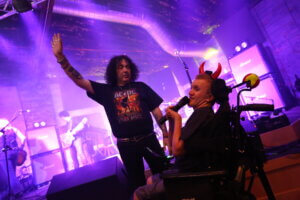
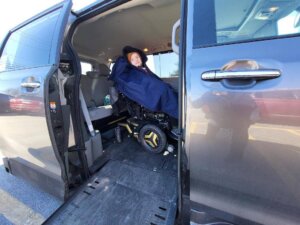 An accessible vehicle became the bridge between home and community. With it, Ethan’s world expanded dramatically. His family made it a priority to build memories while travel was still possible, and over the years, Ethan has visited 42 states, including cross-country road trips that created lasting memories.
 Gelse and her family founded All In for Ethan, a nonprofit organization dedicated to bringing moments of joy to children living with Giant Axonal Neuropathy. Anyone can make a donation through their website at www.allinforethan.org to make a direct impact for these kids.