
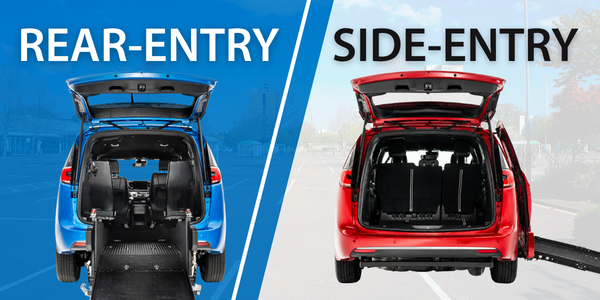
Side-Entry vs. Rear-Entry: How to Tell Which One Fits Your Life
Side-entry vansplace the ramp on the passenger side and let the wheelchair user sit up front or drive, while rear-entry vans place the ramp at the back and usually keep more original seating for passengers. Choosing between them comes down to who drives, where passengers sit, and your daily parking routine, not just the price tag.
If you’re new to wheelchair accessible vehicles, the choices can feel like a lot at first. That’s completely normal. Most people start their search with plenty of questions, and one of the first is about side-entry vs. rear-entry vans.
These are the two most common wheelchair van conversion types. Both can be great options. The right one for you depends less on the price tag and more on how you live day to day.
In this guide, we’ll cover:
- What side-entry and rear-entry conversions are
- How each one works in real life
- Three simple questions that point you toward the right fit
- Common mistakes first-time researchers make
By the end, you’ll have a clearer picture of which entry type may suit your routine, and what to ask when you’re ready to explore your options.
What Are the Main Wheelchair Van Conversion Types?
A “conversion” is a standard vehicle that has been changed to make room for a wheelchair user. This usually means adding a ramp and creating more space inside. Many conversions also lower the floor so there’s enough headroom for someone seated in a wheelchair.
The biggest difference between conversion types is where the ramp is located. That one detail shapes a lot of daily experiences, from parking to seating.
What Is a Side-Entry Conversion?
In a side-entry van, the ramp comes out of the passenger-side sliding door, and the wheelchair user rolls in from the side of the vehicle.
Side-entry vans usually have a lowered floor that runs through the middle of the van. Often, the front seats can be removed. This gives the wheelchair user the option to ride up front as a passenger. With the right driving equipment, they may even drive from their wheelchair.
What Is a Rear-Entry Conversion?
In a rear-entry van, the ramp comes out of the back of the vehicle, and the wheelchair user rolls in through the rear hatch.
The lowered floor is usually a channel that runs from the back toward the middle of the van. The wheelchair user typically rides in the back or middle area. Many rear-entry vans keep more of the original seating, which can be helpful for larger families.
Side-Entry vs. Rear-Entry: A Quick Comparison
Here’s a simple side-by-side look at how the two conversion types compare.

Cost matters, of course. But as the table shows, the bigger differences show up in everyday moments.
Three Questions That Point You to the Right Fit
You don’t need to know a lot about vehicles to make a smart choice. Instead, think about your daily life. These three questions are the best guides.
Question 1: Who Will Be Driving?
This is often the most important question. If the wheelchair user plans to drive, a side-entry van is usually the better fit; if a caregiver or family member will do most of the driving, a rear-entry van often works just as well.
If the wheelchair user wants to drive, a side-entry van is usually the way to go. It can be set up so they drive from their wheelchair or transfer into the driver’s seat. Hand controls and other driving aids can be added, too.
If a caregiver or family member will do most of the driving, a rear-entry van may work well. The driver can easily help load and secure the wheelchair from the back.
What this looks like: Maria uses a power wheelchair and works full time. She wants to drive herself to the office and to visit friends. A side-entry van with driving controls gives her that freedom.
Question 2: Where Will Passengers Sit?
Side-entry vans let the wheelchair user sit up front next to the driver, while rear-entry vans place the wheelchair user farther back, often among other passengers.
Think about who rides along on a normal day, and where everyone wants to be.
Side-entry vans let the wheelchair user sit up front, next to the driver. This makes conversation easier and offers a better view of the road. It can also help people who feel carsick in the back.
Rear-entry vans place the wheelchair user farther back, often next to other passengers. Many families like this because the wheelchair user sits among kids or grandkids.
What this looks like: The Johnson family has three children. Their son uses a manual wheelchair. They want him seated near his siblings, and they need enough seats for everyone. A rear-entry van provides more seating and keeps the kids together.
Question 3: What Does Your Daily Routine Look Like?
Side-entry vans need extra room beside the vehicle for the ramp, typically around 8 feet, while rear-entry vans need clearance behind the vehicle instead.
Picture your usual week. Where do you go? Where do you park?
Consider parking. Side-entry ramps need extra room on the passenger side, typically around 8 feet. That’s why many side-entry drivers look for accessible parking spaces with a wide striped aisle. Rear-entry vans need room behind them instead, which works well in many standard parking spots.
Consider your home. Look at your garage or driveway. Is there more space beside the vehicle or behind it? A narrow garage might favor rear-entry. A tight driveway that backs up to a street might favor side-entry.
Consider curbside drop-offs. Side-entry vans let the wheelchair user exit right onto a sidewalk curb. Rear-entry vans let passengers exit away from traffic when parked along a street, as long as there’s room behind the van.
What this looks like: Robert is a veteran who lives in the city. He often parks on the street and in crowded garages. His wife drives. A rear-entry van fits his routine because it’s easier to use in tight, standard spaces.
Other Things Worth Thinking About
Once you’ve answered the three main questions, a few extra details can help.
The Type of Wheelchair You Use
Power wheelchairs and scooters can be larger and heavier than manual chairs. Measure the height of the wheelchair user while seated. This helps make sure there’s enough headroom inside the van. A Certified Mobility Consultant can help you take these measurements.
Ground Clearance
A lowered floor means the bottom of the van sits closer to the ground. If you often drive on gravel roads, steep driveways, or uneven ground, mention it. Some conversions handle these conditions better than others.
Your Plans for the Future
Many families keep an accessible vehicle for five to seven years. Think about what might change. Will the wheelchair user want to drive someday? Will your family grow? Will a different caregiver be helping? Planning ahead can help you avoid needing a new vehicle too soon.
Common Mistakes to Avoid
First-time researchers often make a few simple mistakes. Here’s how to avoid them.
Choosing Based on Price Alone
Rear-entry vans often cost less upfront. That can be a real benefit. But if a side-entry van fits your routine much better, the right choice may be worth exploring. Financing options can help make either option more affordable.
Forgetting About Parking at Home
Many people focus on stores and appointments but forget their own garage or driveway. Measure your space before you decide.
Not Including the Whole Family
The wheelchair user, the main driver, and regular passengers all have a say. Talk together about what matters most to each person.
Skipping the Test Drive
Reading about conversion types helps. Trying them helps even more. Seeing both types in person or renting one for a day can make the choice much clearer.
Quick Checklist: Which Entry Type Fits You?
Use this list to see what fits your lifestyle.
A side-entry van may be a good fit if:
- The wheelchair user wants to drive
- The wheelchair user wants to ride in the front seat
- You have room on the side of your parking space at home
- You often use accessible parking spaces with wide aisles
A rear-entry van may be a good fit if:
- A caregiver or family member will do most of the driving
- You need more passenger seats
- You often park in standard or tight spaces
- You want a lower upfront cost
If you checked boxes in both lists, that’s okay. Many clients do. That’s exactly where a conversation with an expert can help.
Frequently Asked Questions
Both side-entry and rear-entry vans are safe when properly installed and maintained. The key is making sure the wheelchair is secured correctly. Certified technicians and clear training make a big difference.
Yes. MobilityWorks offers rentals by the day, weekend, or longer. Renting is a helpful way to see what fits your routine.
Needs often change over time. That’s why it helps to talk about your future plans now. A consultant can help you find a vehicle with room to adapt.
Headroom needs depend on the wheelchair user’s seated height, not just the wheelchair type. A Certified Mobility Consultant can measure seated height and match it to a conversion with the right lowered-floor depth.
It depends on the width of your garage and whether there’s room beside the vehicle for the ramp to extend, typically around 8 feet. If your garage is narrow, a rear-entry conversion, which needs clearance behind the vehicle instead, may be easier to use at home.
Rear-entry vans often have a lower upfront cost, but long-term value depends on how well the vehicle fits your routine. A conversion that doesn’t match your daily needs, like driving access or seating, can end up costing more in adjustments down the road.
Find the Right Fit With Expert Guidance
Choosing between side-entry vs. rear-entry doesn’t have to feel confusing. The best guides are already part of your life: your daily habits, who drives, and where passengers sit. When you start there, the choice becomes much clearer.
You don’t have to figure it out alone. Our Certified Mobility Consultants will listen to your needs and guide you through the differences between wheelchair van conversion types. They can help you compare vehicles side by side, take measurements, and explain financing options that fit your budget. The consultation is free, and you can meet with us virtually or at one of our locations.
Compare your options with a Certified Mobility Consultant today. We’re here to help you stay connected to who and what matters most.